
The courage to buzz in
Columbian Quiz Bowl
Seniors Angela Liu and Amelia Miller help lead a Columbian Quiz Bowl team whose quick answers grow out of careful preparation and a shared love of learning.
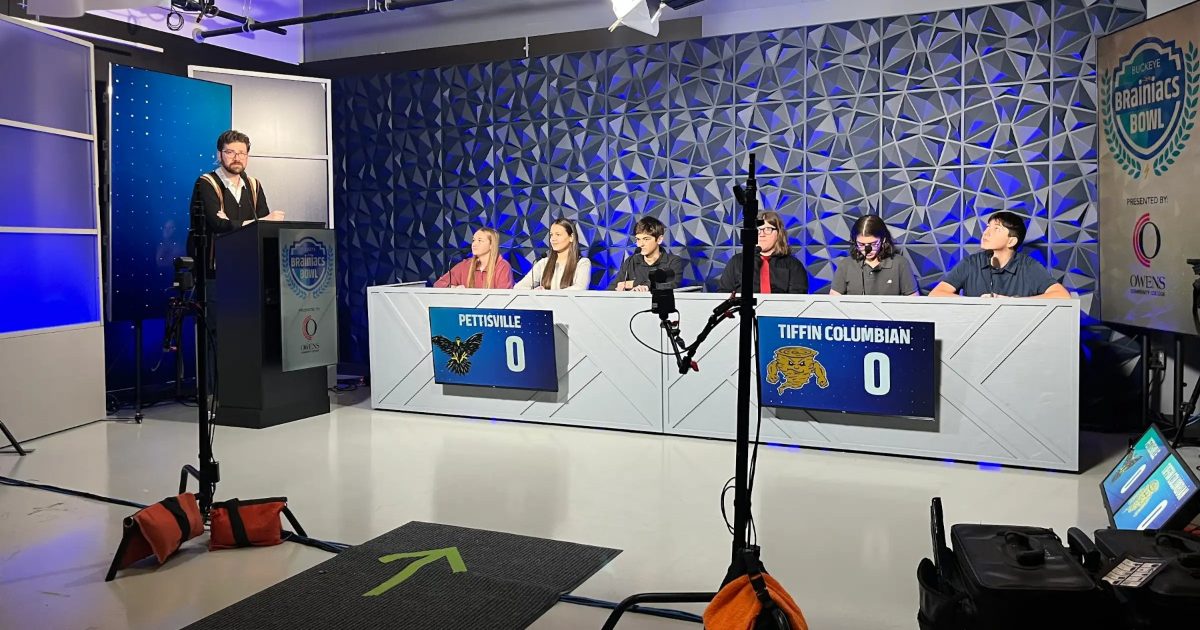
Top photo: Columbian Quiz Bowl team members take their places during filming for the Buckeye Brainiac Bowl last season.
Before Angela Liu joined Columbian High School’s Quiz Bowl team, she and Amelia Miller were answering trivia questions together on YouTube during study hall.
Miller had been on the Quiz Bowl team since middle school. Liu joined as a freshman. Now seniors, they are helping lead a Columbian team that has won its first six league matches this fall, with Liu and Miller leading the scoring on both competition dates.
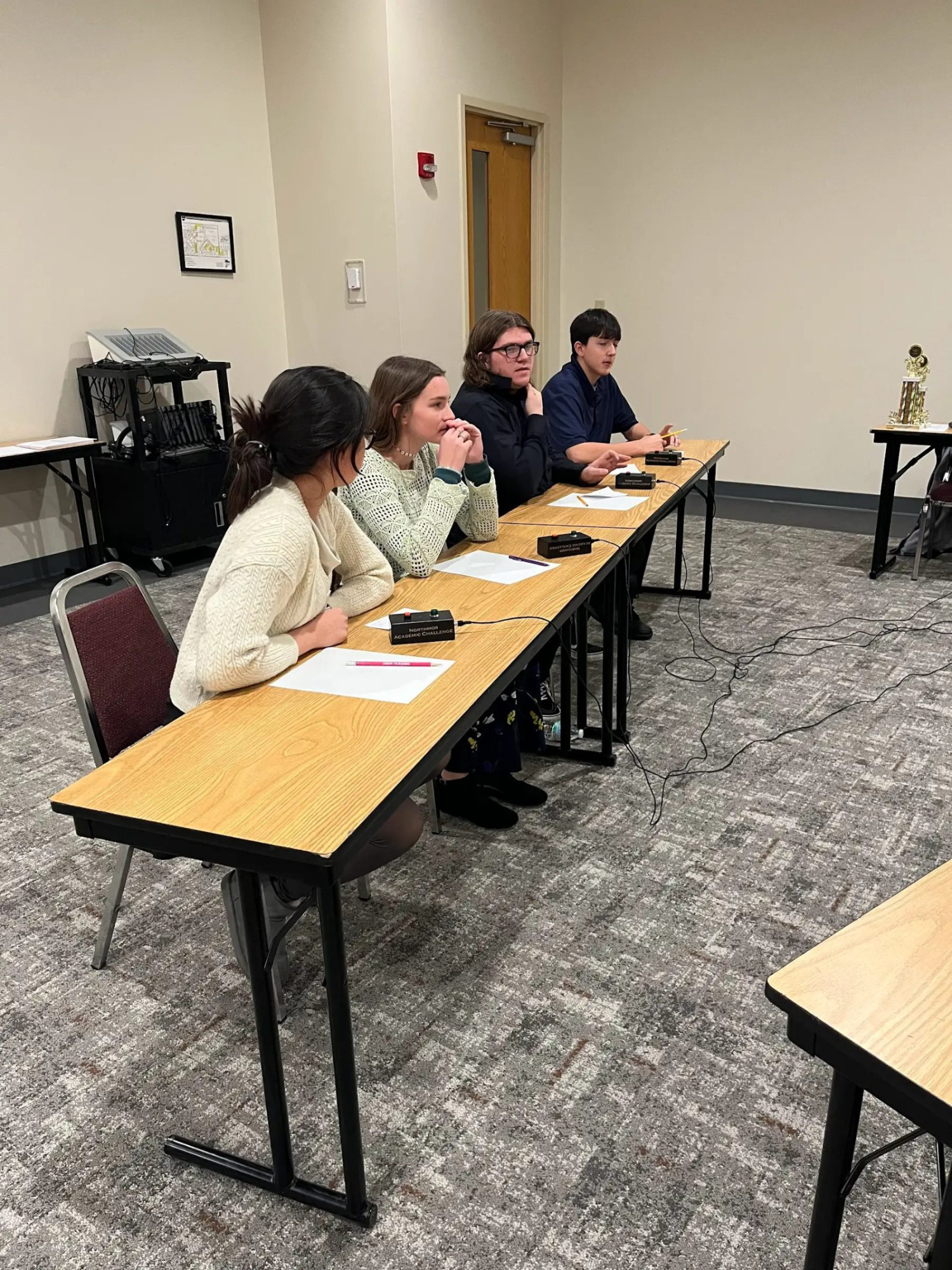
Columbian players wait on a question during last season’s OAC tournament in Mansfield.
Coach Samantha Cole leads the team’s early morning practices, helping students build their knowledge and the confidence to trust it.
For Liu, one of the most rewarding moments comes in a close match, when she recognizes an answer from the first few clues. She has to decide whether she knows enough to press the buzzer. Waiting may bring another useful detail, but it may also give an opponent time to reach the answer first.
In the toss-up-and-bonus format Columbian often plays, players answer toss-up questions individually. Each question is written as multiple sentences, with more obscure information coming first, and easier information ending the question. A correct answer earns 10 points, or 15 if the player answers before a designated early cutoff. That early answer is called a “power.”
Those extra five points reward detailed knowledge, such as recognizing an author before the question reaches the most familiar book. They also reward the confidence to trust what a player has learned.
Following their curiosity
Liu works deliberately at her two strongest subjects, literature and math. When a question falls within those areas, she tries to retain what she hears and add to what she knows. Her aim, she said, is to “gain expertise in those two specific fields.”
Miller recognizes that determination in her teammate. She describes Liu as competitive and attentive to the statistics, always looking for ways to improve. Liu sees Miller as someone eager to share a story or explain an unfamiliar fact, with knowledge ranging from mythology to science.
They have also found that Quiz Bowl can change what they want to learn.
“I didn’t realize I was a literature lover,” Liu said.
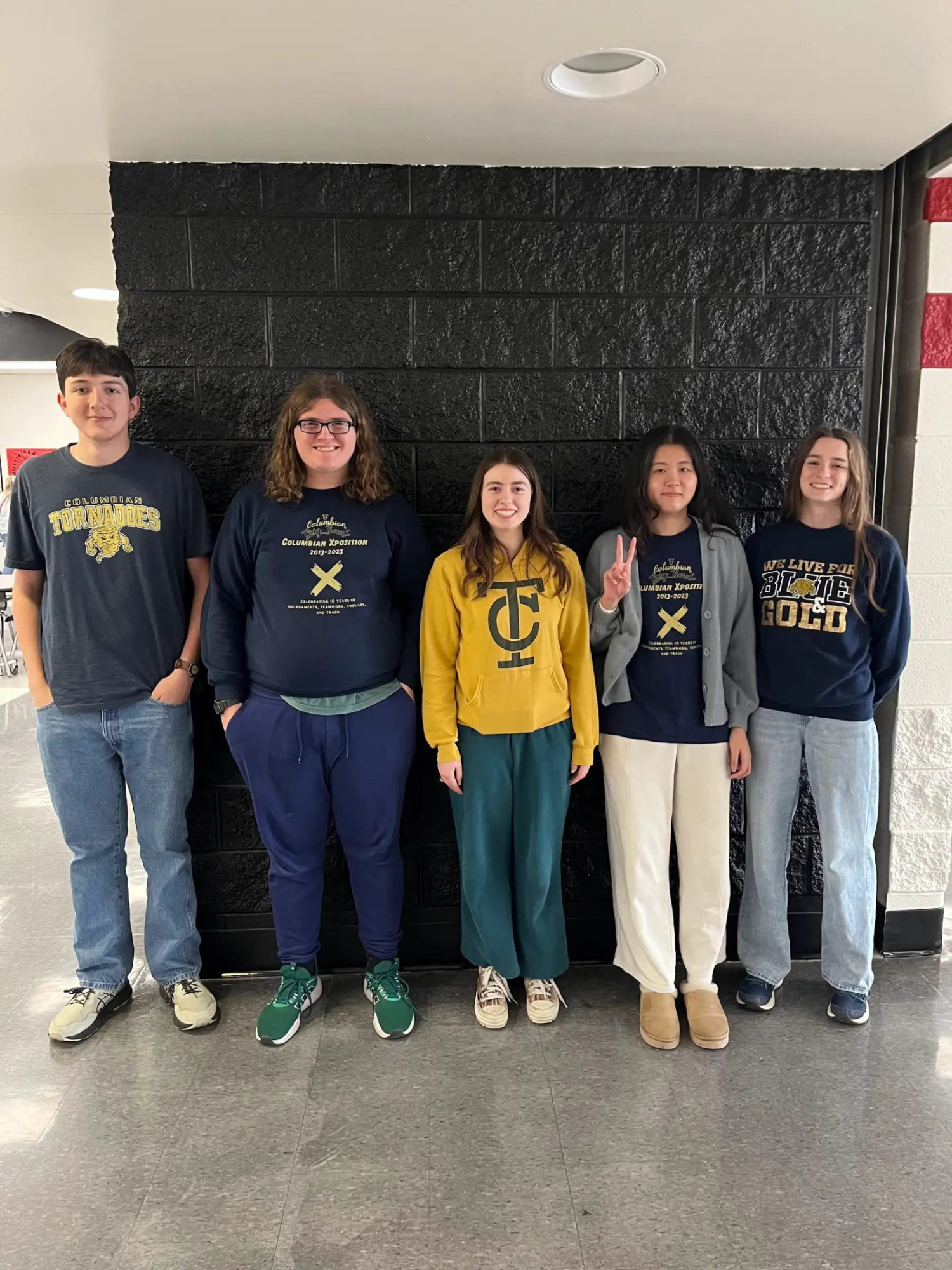
Columbian players at the NAQT state tournament last April.
Literature questions became an invitation to seek out books. Geography questions sent her toward countries and flags. Sometimes, a subject she first encountered at Quiz Bowl returned in class, giving her another way to use what she had learned.
Senior Kenton Fell saw that preparation pay off after noticing how often Ernest Hemingway appeared in questions. He began reading the author’s best-known works, starting with The Old Man and the Sea. At the next tournament, he was able to answer a set of three bonus questions about the book.
Much of Miller’s preparation comes from what she calls her “usual intake of information.” When she encounters something unfamiliar, she wants to understand it. After reading about Revolutionary War spy Nathan Hale, she was delighted when he appeared in a Quiz Bowl question. She made sure her teammates knew about him, too.
“I like knowing just for the sake of it,” Miller said.
Junior Lyra Kin enjoys learning the stories behind writers such as Mary Wollstonecraft and Mary Shelley, including their relationships with other writers. Those details make her want to learn more.
Discovering how much she could remember surprised Kin. It also encouraged her to keep going, looking through study resources and seeking out videos about books. Quiz Bowl, she said, is “making me want to learn more.”
6:45 a.m. in the library
That curiosity becomes a regular commitment at 6:45 a.m. Tuesdays and Thursdays, when the team practices in the Columbian library. Cole uses question packets from previous years, giving students repeated chances to encounter subjects and recognize the clues that point toward an answer.
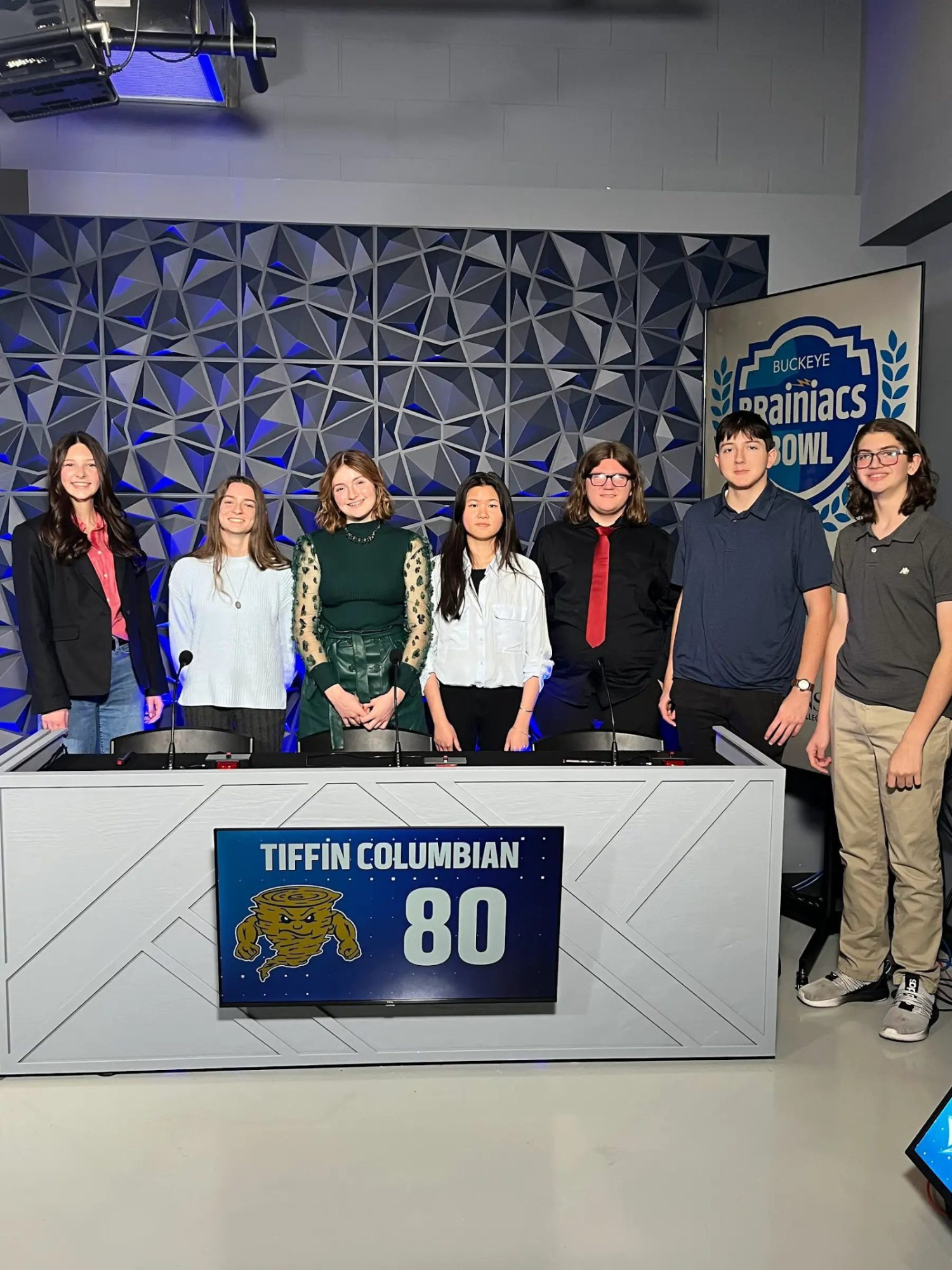
The Columbian team on set for the Buckeye Brainiac Bowl.
At practice, students can “feed off each other for ideas,” Kin said. They talk through possibilities, using a poet’s nationality or a remembered title to narrow the field. There is time to work out a connection they will need to make quickly in competition.
Cole sees the difference that repetition makes. Students develop a store of knowledge they can draw on, along with a better sense of when they are ready to answer. A question they miss becomes something they can recognize the next time it appears.
Cole schedules practices before school to reduce conflicts with other activities and welcomes students for the time they can manage. Kin often arrives around 7 a.m. Even a few minutes, she said, can introduce something worth remembering.
One answer opens the door
The students also learn what they can count on from one another. Kin readily names teammates’ strengths: Miller in mythology, Liu in literature and math, her best friend Layne Woodruff in biology. Other students know the sports answers that leave Kin less certain.
That knowledge becomes especially valuable after a correct toss-up, which earns the team a three-part bonus worth up to 30 points. Now teammates can confer, combining what they know. One player’s answer creates an opportunity for everyone to contribute.
“If you answer zero toss-ups, it does not mean you did not do well,” Kin said.
Individual scoring statistics track toss-ups; bonus points belong to the team. A student who never reaches the buzzer first may still provide answers that help decide a match.
Kin is equally clear that having a specialty does not give anyone ownership of a subject. Another student may have read the same book and made the connection faster. She wants that teammate to answer. Specializing in literature, she explained, “does not mean I know everything.”
That depth matters in league matches, where rotation rules require players to spend part of the match out of the lineup. Students need to keep working when their usual expert is sitting out. Kin points to the effort teammates put into solving math problems on scratch paper, trying to find a way forward together.
The results this fall reflect contributions across the roster. Along with its six league wins, Columbian’s A team placed third at the Oct. 3 Columbian Exposition, which brought together 12 teams and more than 60 students from across Ohio. Senior Christian Keefe finished seventh among individual scorers, Fell placed 10th and sophomore Liam Sherman finished 11th.
Kin finished eighth, scoring 205 points for Columbian B. Her performance included two powers, earned by recognizing answers before the easier clues arrived.
“If you answer zero toss-ups, it does not mean you did not do well.”
Lyra Kin, junior
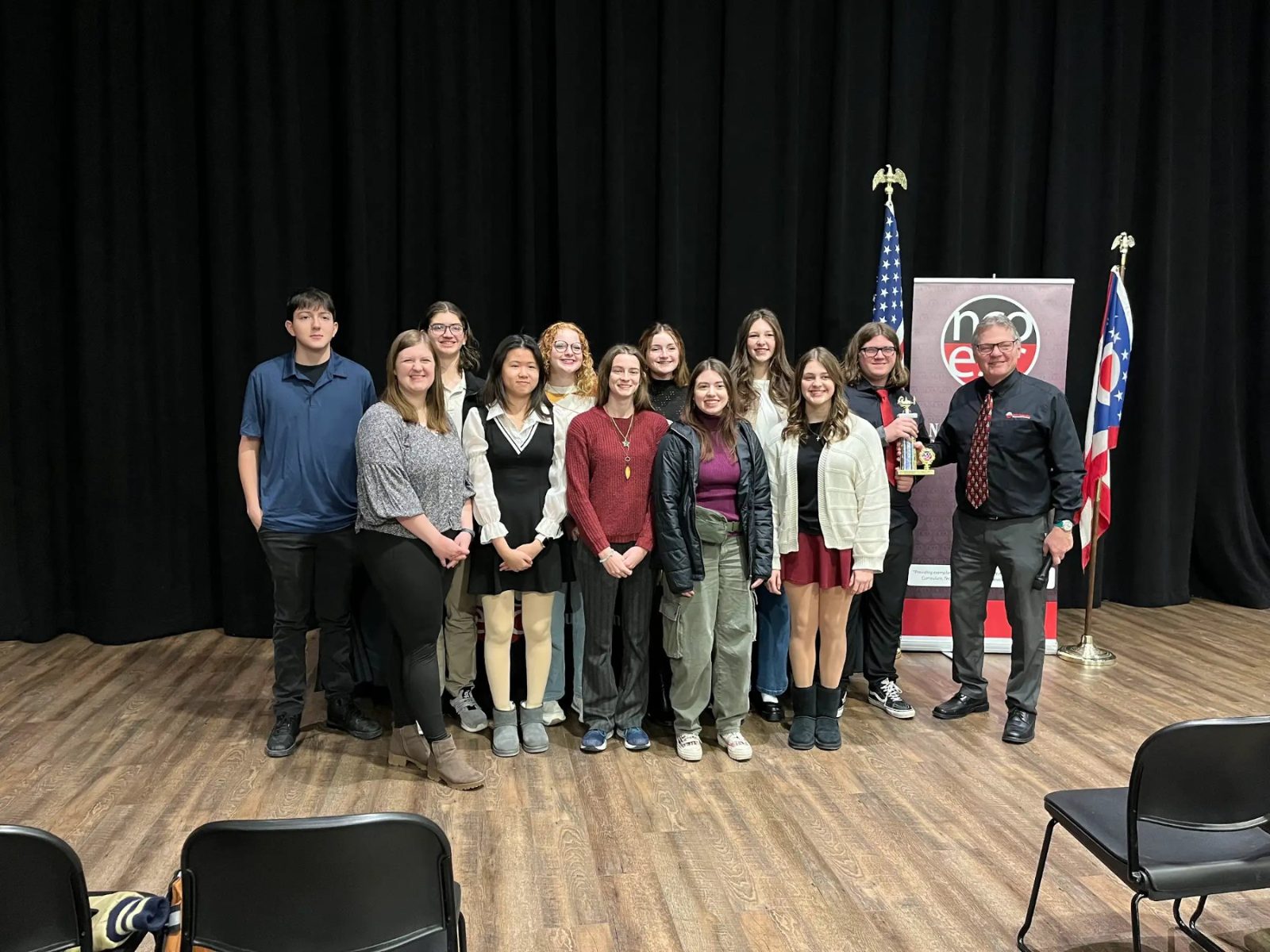
Columbian Quiz Bowl at the NCO league tournament last December.
She and Woodruff helped lead their team of juniors that day. Kin remembers the pressure of that responsibility, and how far she had come from her first year.
“I remember my freshman year, I was really scared to buzz in and get something wrong,” she said.
Willing to be wrong
Learning when to answer is part of the skill. An incorrect interruption can cost the team five points, a penalty players call a “neg.” It also ends that team’s chance to answer the toss-up, leaving the opponents to hear the remaining clues. An incorrect answer after the question is finished carries no point deduction.
Cole notices that students who earn the most powers also tend to collect the most negs. They are willing to act on what they know before the answer becomes obvious. She wants players to learn from a miss and stay ready to contribute to the next question.
“You have to put yourself out there,” Cole said.
Miller, one of the team’s captains, tries to make that lesson visible to younger players. When uncertain, she may wait until a question is finished and check that no teammate knows the answer before offering one herself. That lets her take a chance without risking a point deduction and shows newer players that an imperfect attempt is part of learning.
“I think it’s really important to guess and sometimes have wrong answers,” Miller said.
That responsibility has helped Miller grow more confident as a leader. She wants younger teammates to feel comfortable contributing, even while they are still developing their knowledge. Kin has learned to approach a missed answer with the same willingness to keep working: review what went wrong, understand the connection and be ready to try again.
Fell said Quiz Bowl has become his favorite high school activity and helped him grow as a leader. He appreciates how “the team as a whole encourages each other to improve.”
“I think it’s really important to guess and sometimes have wrong answers.”
Amelia Miller, senior captain
A community worth joining
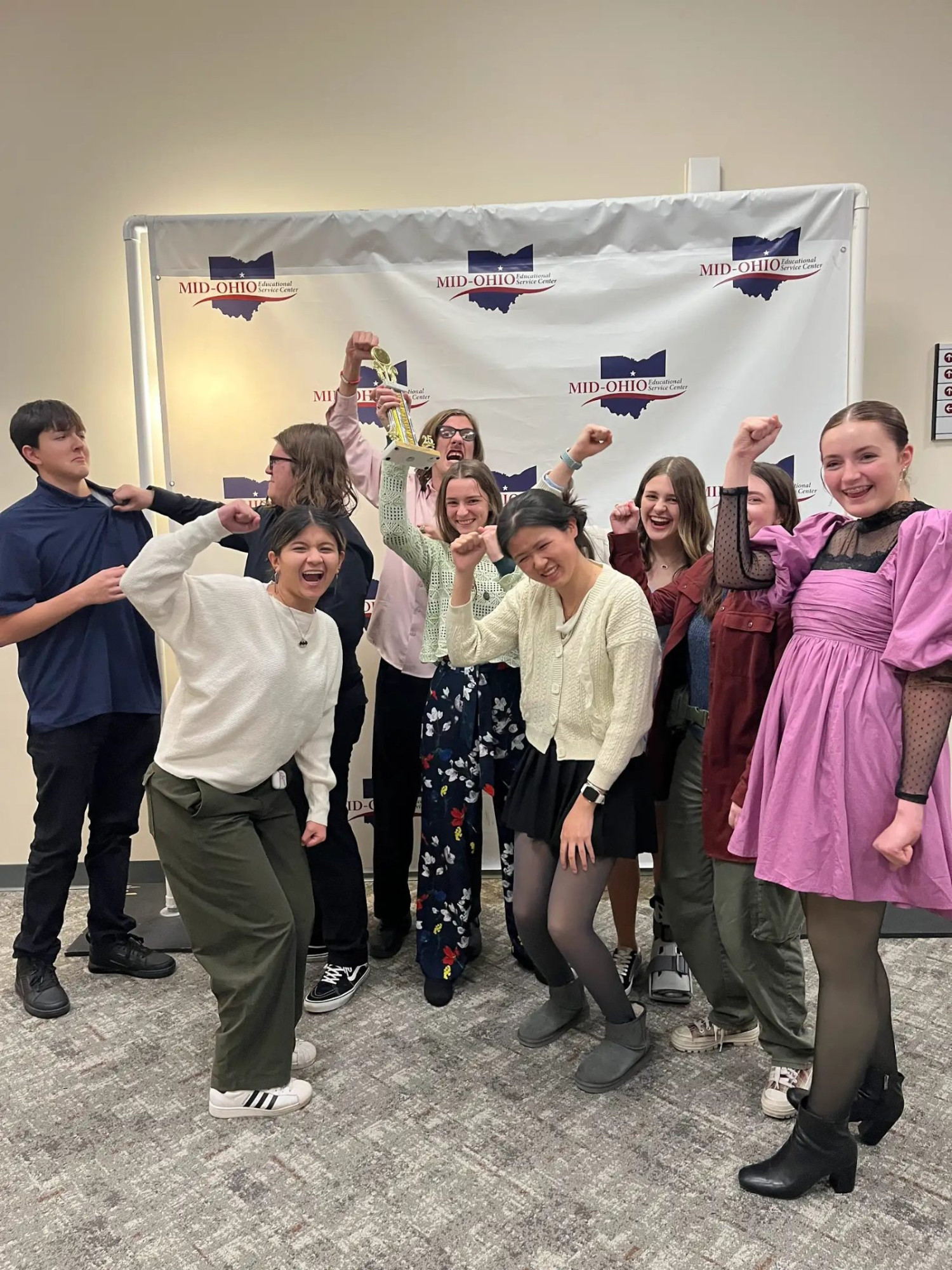
Columbian players celebrate at last season’s OAC tournament in Mansfield.
The relationships built through that work give students another reason to return. Kin talks about tournament lunches together and summer practices that keep interested students involved. For Miller, the people are central to the experience.
“I love the community and the people in it,” she said.
Cole found her own place in that community in 2018, when she volunteered to read questions at Columbian’s home tournament. She later became an assistant coach and took over after the previous coach, Leonard Donaldson, retired. This year’s tournament again drew help from district staff and alumni who returned to volunteer.
A Spanish teacher, Cole values getting to know students she might never have in class and continuing relationships with those who have finished her courses. Her roster includes about 20 to 25 students, with participation varying around other commitments. Students communicate about which competitions they can attend, and Cole works to keep them involved through busy seasons.
Kin first joined after a friend told her about the questions the team was answering. She recognized subjects she already enjoyed, and she and Woodruff decided to try it as freshmen. Now she wants other students to know they can start in high school without having played in middle school. They can attend practice, build their knowledge and decide when they feel ready to compete.
“Even if you start without knowing anything, you learn as you go,” she said.
Liu and Miller once shared trivia questions during study hall. In their senior year, they are helping lead a team where one student’s answer opens the way for everyone else to contribute. Kin, once hesitant to reach for the buzzer, is already encouraging other students to find a place beside them.
The courage to buzz in grows out of that preparation and trust. As Columbian’s season continues, the students doing that work give their community a team worth following and plenty to cheer for.
« Back to District News
Tiffin City Schools
244 South Monroe Street
Tiffin, OH 44883
(419) 447-2515
Contact Us
Follow Us:
If you or someone you know is in crisis, call or text 988 to reach the suicide and Crisis Prevention hotline.
Contact Us
If you are reaching out during non-school hours, your email may not be addressed until the next business day. If you prefer to phone our district office, please call (419) 447-2515.